







What Temperature Should Your Baby's Room Be? (Hint: There's No Magic Number)

I don't know if you're like me, but I questioned EVERYTHING when it came to my baby. I'd always heard about room temperature but never understood the "why." If my baby stirred, cried, or wiggled, I'd think — is he too hot? Too cold? It drove me nuts!
Here's the thing: if your baby is waking more often, taking short naps, or struggling to fall asleep, the room temperature could be playing a bigger role than you think. Babies are much more sensitive to heat and cold than adults, and even a few degrees can affect the quality of their sleep.
The good news is that getting the sleep environment right is one of the easiest wins available to a tired parent.
Is there an "ideal" room temperature?
There is no official ideal room temperature for baby sleep. Red Nose, Australia's safe-sleep authority, deliberately doesn't set one, because babies sleep safely across a range of temperatures when dressed appropriately. Rather than chasing a number on the thermostat, match your baby's sleepwear to the room they're actually sleeping in.
You'll still see numbers like 20–22°C (68–72°F) quoted all over the internet, and plenty of babies sleep happily in that range — treat it as a reference point, not a target.
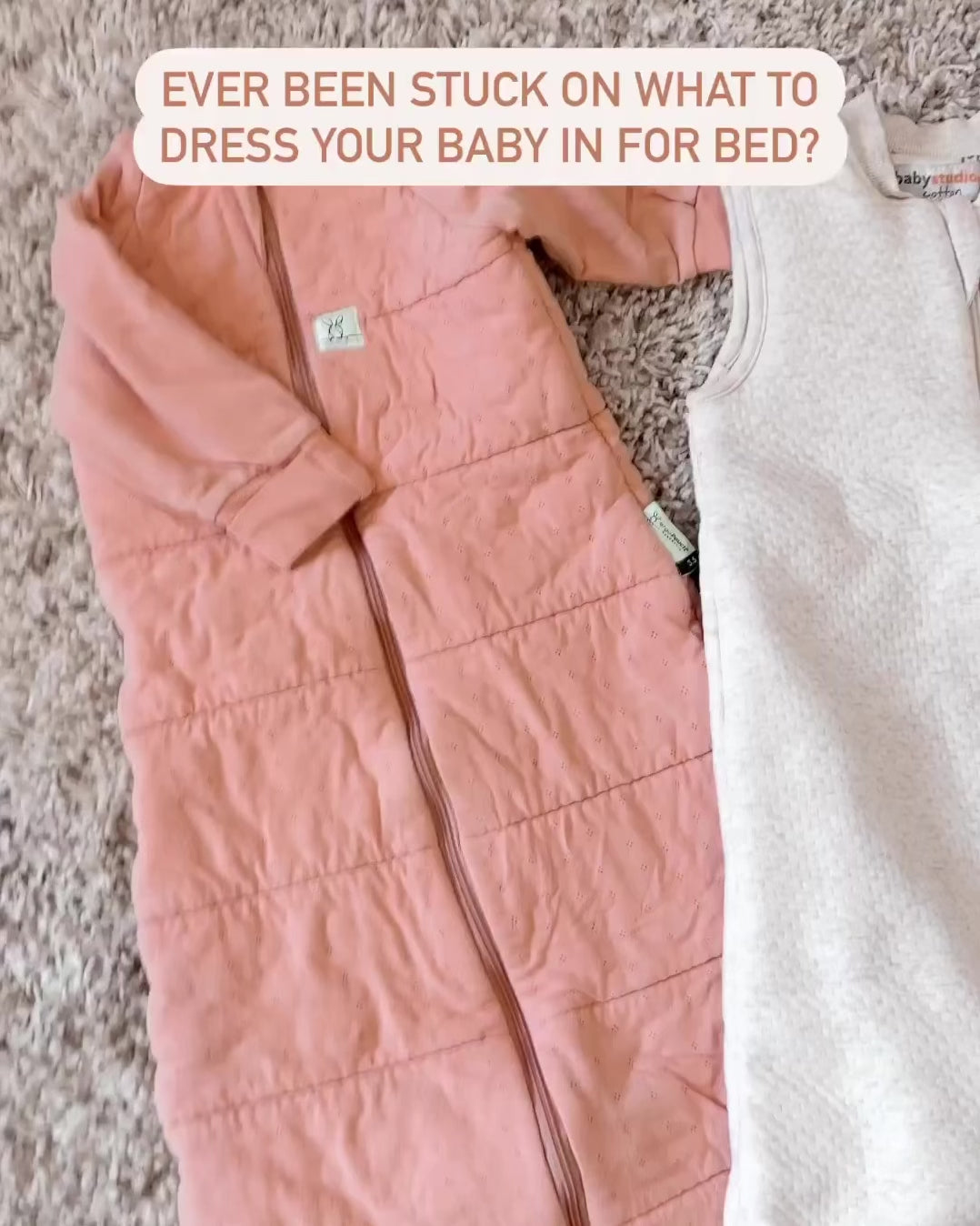
The real skill — and honestly the thing that finally stopped my 2am second-guessing — is dressing baby for the room you've got. Not too hot. Not too cold. Just right.
Why temperature matters
Unlike adults, babies can't regulate their body temperature efficiently. When they're uncomfortable, their little bodies work harder to warm up or cool down instead of staying in deep, restorative sleep (and I want my baby to sleep).
Overheating is the sneakier risk of the two, because it has been associated with an increased risk of sudden unexpected infant death. Not to scare you — but it's important I equip you. That's why safe sleep guidelines recommend dressing babies appropriately for the room temperature instead of using loose blankets, and keeping heads uncovered for sleep.
A baby who's too warm might:
- Wake frequently during the night
- Take shorter naps
- Sweat while sleeping, or have flushed cheeks and damp hair
- Struggle to settle at bedtime
A baby who's too cold might:
- Wake earlier than usual
- Have trouble falling asleep
- Feel cool on their chest or back
One reassurance from me to you: cool hands and feet are completely normal in babies and not a sign your baby is cold. Check the chest or the back of the neck instead — that's where you get an honest answer.
Tips for a comfortable sleep environment
- Dress for the room, not the season. Check what the room is actually doing tonight, then choose sleepwear to match — including the TOG rating of sleeping bags and rompers.
- Use a sleep sack or swaddle instead of loose blankets — safer, and they can't be kicked off at 2am.
- Choose breathable natural fibres like cotton.
- Do the neck check. A hand on the chest or the back of the neck tells you more than touching hands or feet ever will.
- In summer, blackout curtains during the day and a fan (aimed to circulate, not blow on baby) help take the edge off.
- In winter, add a clothing layer or step up a TOG rather than cranking the heater — rooms that are toasty at bedtime are often the ones that cause overheating by 10pm. And remember the room you put baby down in at 7pm usually isn't the room they're in at 3am — the overnight temperature drop catches a lot of families out.
The tool I wish I'd had: Sleep Like Goldilocks
Here's something I genuinely wish existed when my kids were babies, and something I now recommend to the families I work with: the Sleep Like Goldilocks thermometer and night light.
Created by parents with science backgrounds, and Australian designed and supported, it reads your nursery's temperature, predicts the overnight low, and tells you exactly what TOG-rated sleepwear to dress your baby in for the night ahead — so you're dressing them for 3am, not just for bedtime. No guesswork, no 2am second-guessing, and the gentle colour night light is built in.
If you've ever stood over the cot wondering "singlet under the sleeping bag, or not?" — this answers that question every single night.
Final thoughts
Room temperature isn't always the cause of sleep struggles, but it's one of the first and easiest things to check. And if your little one is repeatedly waking at 3am no matter what you do, temperature at that specific hour is worth ruling out.
A comfortable, safely-dressed baby finds it easier to fall asleep, stay asleep, and wake up well-rested. And so, hopefully, do you.
Jamie Ortiz is a Certified Sleep Coach at I Help Moms, where she creates personalised sleep plans for tired families. I Help Moms also offers a free sleep app with personalised sleep plans.
Ready to take the guesswork out of dressing your baby tonight? See how the Goldilocks thermometer works.

